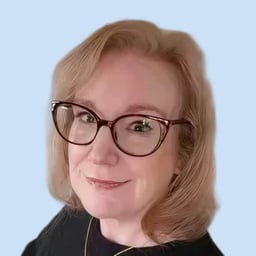
Arkangel AI is a Bogotá-based company that analyzes medical data to flag patients who may have a missed diagnosis. It reads the parts of a record that many healthcare AI tools skip: physician notes, shorthand, images and other unstructured material that makes up much of what a clinician writes down.
Founded in 2019, Arkangel now operates across Latin America. Its clients include Novartis, AstraZeneca and Roche.
Arkangel's co-founder and president Laura Velásquez Herrera spoke with The Infinite Loop in London about the customer that arrived before the product was ready, and the investor who told her she was nothing.
TIL: You sell to both pharma and hospitals, buyers with very different incentives. What’s the connective tissue?
Velásquez Herrera: Arkangel is an AI company. What we do is analyze medical records to identify different types of diseases early enough. So we can help patients, we can help the physician, and we can help the hospital and the healthcare system.
We work with three different types of customers. Healthcare insurers, where we analyze very large datasets to identify errors on both the operational and the clinical side. Pharmaceutical companies, where we work with AstraZeneca, Roche, Sanofi, Boehringer and so on. And hospitals, where we help them identify those overlooked patients.
So we help hospitals find patients, we help the pharmaceutical companies increase access to different types of treatment, and we help the healthcare insurers analyze all this data in order to help the patient as well. It is basically the same technology, but the output for each of them is completely different.
TIL: If people ask what your moat is, what makes you different, what do you say?
Velásquez Herrera: What we have been working on is a way to analyze unstructured data to identify the patients who would otherwise be missed. What you can find in the market right now are specific algorithms that analyze structured data in order to give you a specific output for a specific disease. What we are doing is analyzing any type of data. It could be images, it could be any type of notes from physicians. We can connect the data points to identify issues and reach patients with an early diagnosis. And we have scientific publications that validate what we have been working on, including a paper presented at the 2025 IEEE Conference on Artificial Intelligence on PANDORA, our framework for extracting clinical data from unstructured records and applying clinical risk scores.

Co-founder and president of Arkangel AI Laura Velásquez Herrera. Credits: Nebius
TIL: What sets the Latin American market apart?
Velásquez Herrera: I am from Colombia. We do not have much access to healthcare in Latin America. Right now, we are trying to close that gap. We are operating in Mexico, Colombia, Peru, Argentina and Chile, helping patients through the healthcare system.
Where it started
TIL: How did you start? What was the initial idea?
Velásquez Herrera: We have been working on it for about six years. We started because of a family problem. I lost three of the most important people in my life, in my family, just because they were not diagnosed at the right time. And I lost all of them in less than a month and a half.
And I said, how can I help my family take a more preventive approach? Then we started building a chatbot on Facebook Messenger, and it went viral. In less than a month, we had more than 9,000 users in 22 countries. And we said, okay, this is a big problem. We need to understand what is going on here. That is why we started.
TIL: What was your biggest obstacle in building Arkangel?
Velásquez Herrera: The biggest obstacle, I think, was that I did not know anything about health or AI, but I started building this AI startup in the healthcare space. So building trust was the most difficult thing.
We were living in Canada and the U.S., and when you start building this type of thing, being a woman and being Latina, people say, okay, you don't know anything about this. You have to be more conscious about what you are doing, and you have to put in more effort to make it possible. So both of those things were hard at the beginning.
But right now everything is different when you can prove that it works. Even if I am a woman or Latina, we can build something big if we can help people.
TIL: When did it shift from hard to possible?
Velásquez Herrera: I think nothing changed. Maybe it was me. I changed my mindset about being able to do it even if other people didn't believe in me. I was in Montreal, Canada, pitching at a demo day. And an investor told me: "You are nothing because you are a woman and you are Latina, and this is nothing. Next."
And I thought, oh my God, what is going on here? I started thinking about it, and I said, okay, the problem is not mine. The problem is his, because he is trying to push us back just because we are not from the same background. And this changed my mindset.
The world can shit on us, sorry for the word. But it is your mind, it is your problem to change your behavior and your attitude when approaching these kinds of things. Of course, sometimes it is hard, sometimes it is easier, but it depends on how you approach things.
‘You feel like you are doing something that matters’
TIL: We run a newsletter format called The First Customer, where we ask founders about the moment a company got its first paying customer. Who was yours?
Velásquez Herrera: It was Novartis. They were looking for something new to identify patients with malaria early enough in rural locations in Latin America. We said, okay, we can apply for this, let's see what happens. But we did not meet all the requirements they were looking for.
And suddenly they said, we want to understand a little bit more about what you have been working on. We were doing everything from scratch. And they said, okay, we really like what you are doing, we are not sure what is going to happen with this, but we want to try. How much does it cost?
And we said, okay, we have to get the hospitals, we have to get the patients, we have to get all of these things and prove that it works in rural locations, with no internet, no anything. And we agreed to try.
We implemented it in Chocó, a rural region in Colombia. And we helped almost 6,000 people by identifying two diseases: malaria and Chagas. Actually, we started building AI for rural locations, not for the cities.
TIL: How did it work technically?
Velásquez Herrera: We were reading images of the blood smear, what you see through the microscope. We were analyzing what type of malaria a person had, and the parasitemia, how many parasites they had. We analyzed those things by taking a picture with a phone used by people there. It wasn't an iPhone, it wasn't an Android, it was the worst mobile anywhere.
So we had a lot of barriers, but then we proved that if we can bring AI to rural locations, we can help a lot of people for free. So we started building this business model in which we ask pharma companies to pay for it, and we implement it in different locations. It can also work in urban locations, because that is where most people live, but with this we can help people in rural locations for free.
When you can help people, it is really nice. You feel like you are doing something that matters. The people we help will never hear the word ‘algorithm.’ They may never know Arkangel exists. They just get diagnosed in time. That’s the only metric that really matters to me.
TIL: You've been awarded the regional trailblazer award at the Nebius AI Discovery Awards. What’s your plan with the credits?
Velásquez Herrera: We plan to use the credits to adapt Pandora to new hospitals' documentation styles and make it faster and cheaper to run as we scale.
Disclosure
Velásquez Herrera spoke with The Infinite Loop at the Nebius AI Discovery Awards ceremony in London, where Arkangel AI was named a regional trailblazer for Latin America. The Infinite Loop is a Nebius editorial project. Editorial decisions are made independently.